Chronology
Timeline
Seventy years, from a scholar’s house in Mecca to a minister’s office in Delhi — and the observances that followed.
Dates below are given as precisely as the record allows. Where a source gives only a year, only a year appears.
Chronology of events, 1888 to 2008
-
188811 November
Born in Mecca
Abul Kalam Ghulam Muhiyuddin is born in Mecca to Maulana Muhammad Khairuddin, an Indian religious scholar, and Sheikha Alia, the daughter of an Arab scholar. Around 1890 the family settles in Calcutta.
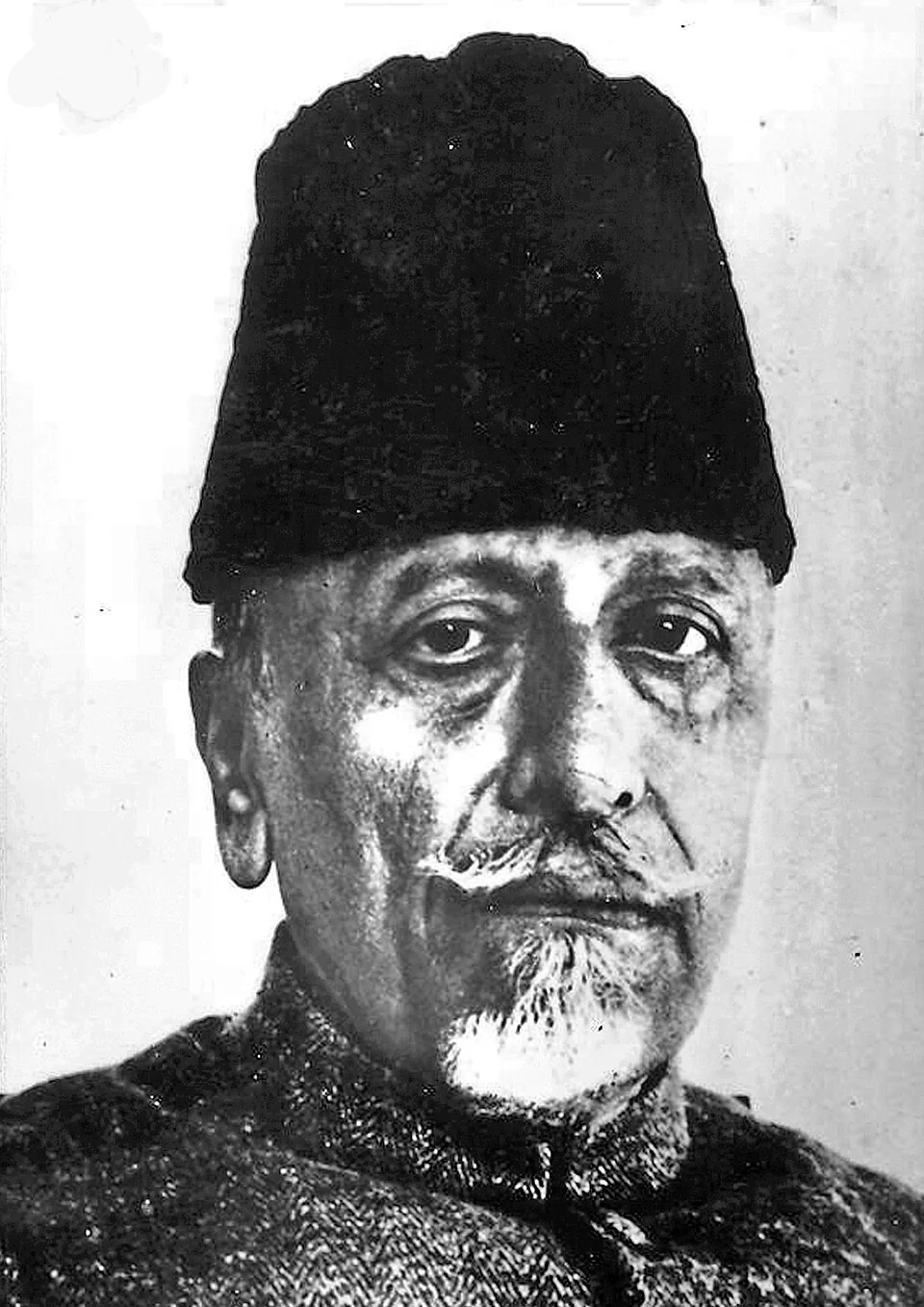
PortraitArchival photograph. Date not recorded in the available source. -
1899– 1905 · Early journals
A boy in print
He begins publishing while still a child: a poetical journal, Nairang-e-Aalam, in 1899; a weekly, Al-Misbah, in 1900; and a monthly, Lissan-us-Sidq, from December 1903 to May 1905. These are small ventures, but they teach him the trade of running a periodical.
-
191213 July
Al-Hilal is launched
The first issue of the Urdu weekly Al-Hilal appears in Calcutta. It argues for Indian nationalism and for cooperation between communities, addressed to a young Urdu readership, and finds an audience quickly.
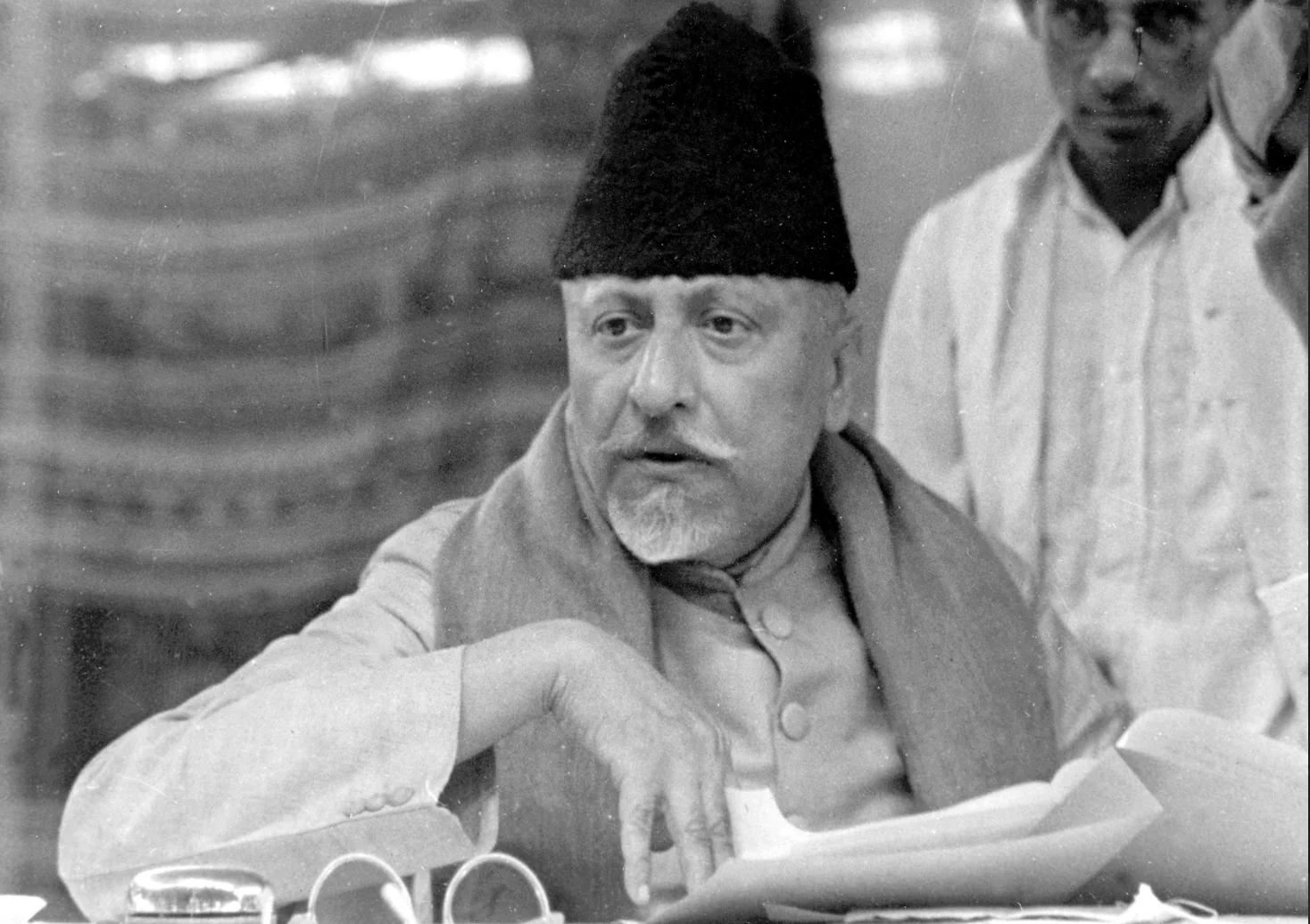
ArchiveAzad among papers. Occasion and date not recorded in the available source. -
1914Suppression
Al-Hilal is banned
Government and institutional accounts record that Al-Hilal is suppressed by the colonial government under press legislation. The outbreak of the First World War has widened the administration’s powers over publication considerably.
-
191512 November
Al-Balagh, and then silence
Azad begins a second Urdu weekly, Al-Balagh, continuing the same argument. It runs into 1916, when it too is stopped and he is removed from Calcutta under wartime regulations. He is held under restriction — latterly at Ranchi — until 1 January 1920.
-
19201 January · Released
Into mass politics
Released into a transformed political landscape, Azad joins the Khilafat and Non-Cooperation movements and the Indian National Congress. In October he is a member of the foundation committee of Jamia Millia Islamia.
-
1923September · Delhi
Congress president, at thirty-five
He presides over the special session of the Indian National Congress in Delhi — the youngest person to have been elected president of the organisation. The session confronts the strategic split that followed the suspension of Non-Cooperation.
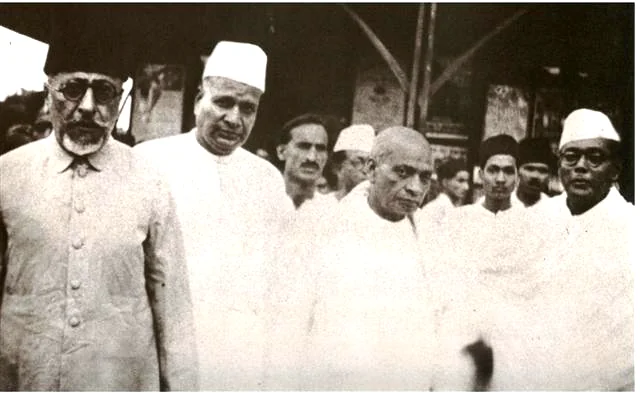
ArchiveCongress leaders, Azad at left. Occasion not recorded in the available source. -
1930sCivil disobedience
Prison, repeatedly
Azad is among those imprisoned during the Civil Disobedience years. The decade also brings provincial autonomy under the Government of India Act of 1935 and, with it, a sharpening of the constitutional question about minority representation.
-
1940March · Ramgarh
President again, for six years
Elected Congress president at the Ramgarh session. His presidential address sets out his case for a single Indian nationality at length; it is the text most often quoted from him today. Days later the Muslim League adopts the Lahore Resolution.
-
19428 August · Bombay
Quit India, and Ahmednagar Fort
The All India Congress Committee passes the Quit India resolution with Azad in the chair as president. The leadership is arrested within days. He is held at Ahmednagar Fort until 1945, where he writes the letters collected as Ghubar-e-Khatir.
-
1946Cabinet Mission
The last chance at a united India
Azad leads the Congress delegation in the Cabinet Mission negotiations and supports the 16 May proposal for a federal union with grouped provinces. The plan does not hold. In November he enters the Constituent Assembly.
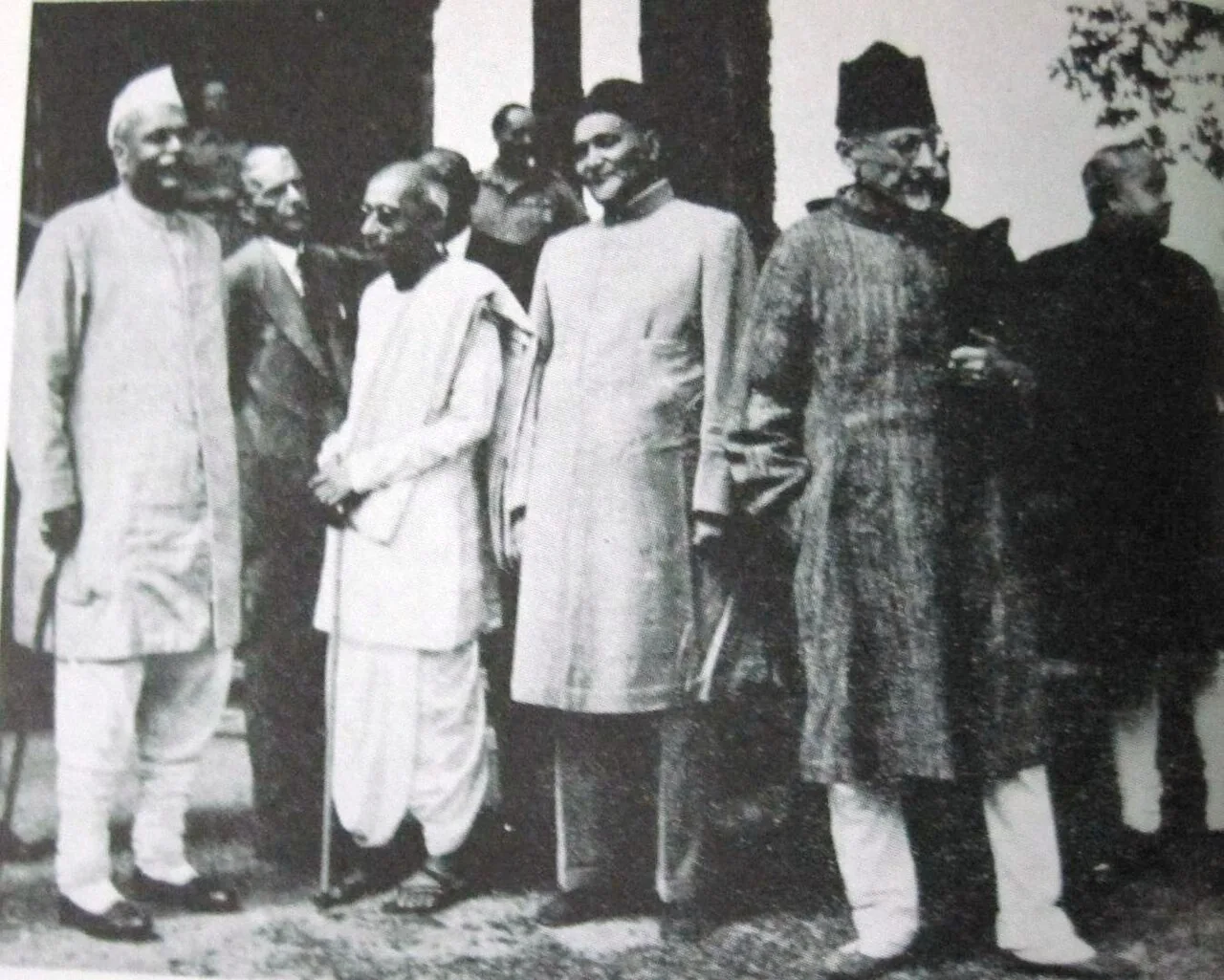
ArchiveLeaders at the Simla conference. Reproduced from a printed source. -
194715 August
Independence, Partition, and a ministry
India becomes independent and is partitioned. Azad, who had opposed the division and whom available accounts record as abstaining when the All India Congress Committee accepted the plan in June, becomes independent India’s first Minister of Education. On 23 October he addresses Muslims at the Jama Masjid in Delhi.
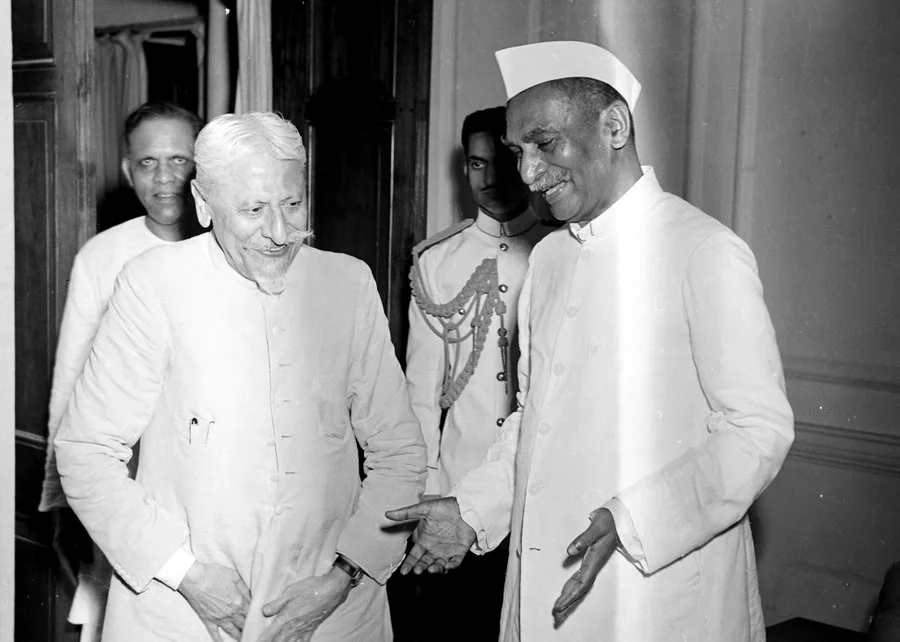
ArchiveAzad with Dr Rajendra Prasad. Occasion and date not recorded in the available source. -
1950– 1954 · Institutions
Building the knowledge system
The Indian Council for Cultural Relations is founded in April 1950 with Azad as its first president. The first IIT opens at Kharagpur in 1951. The Sangeet Natak Akademi is established by resolution in 1952; the Sahitya Akademi is inaugurated on 12 March 1954 and the Lalit Kala Akademi on 5 August 1954.
-
195328 December
The University Grants Commission
Azad formally inaugurates the UGC, created to coordinate university education and maintain standards across institutions. It receives statutory footing by an Act of Parliament in 1956. In 1952 he had been elected to the Lok Sabha from Rampur.
-
195822 February
Death in Delhi
Maulana Abul Kalam Azad dies in Delhi, still holding the education portfolio after eleven years. He is buried near the Jama Masjid in Old Delhi, where his tomb stands today.
-
1959– 1988 · Publication
India Wins Freedom
His account of the independence struggle is published by Orient Longmans in 1959, the year after his death. About thirty pages he had considered too personal for immediate publication were deposited under seal; following a court direction in 1988 they were released and a complete edition was published that year.
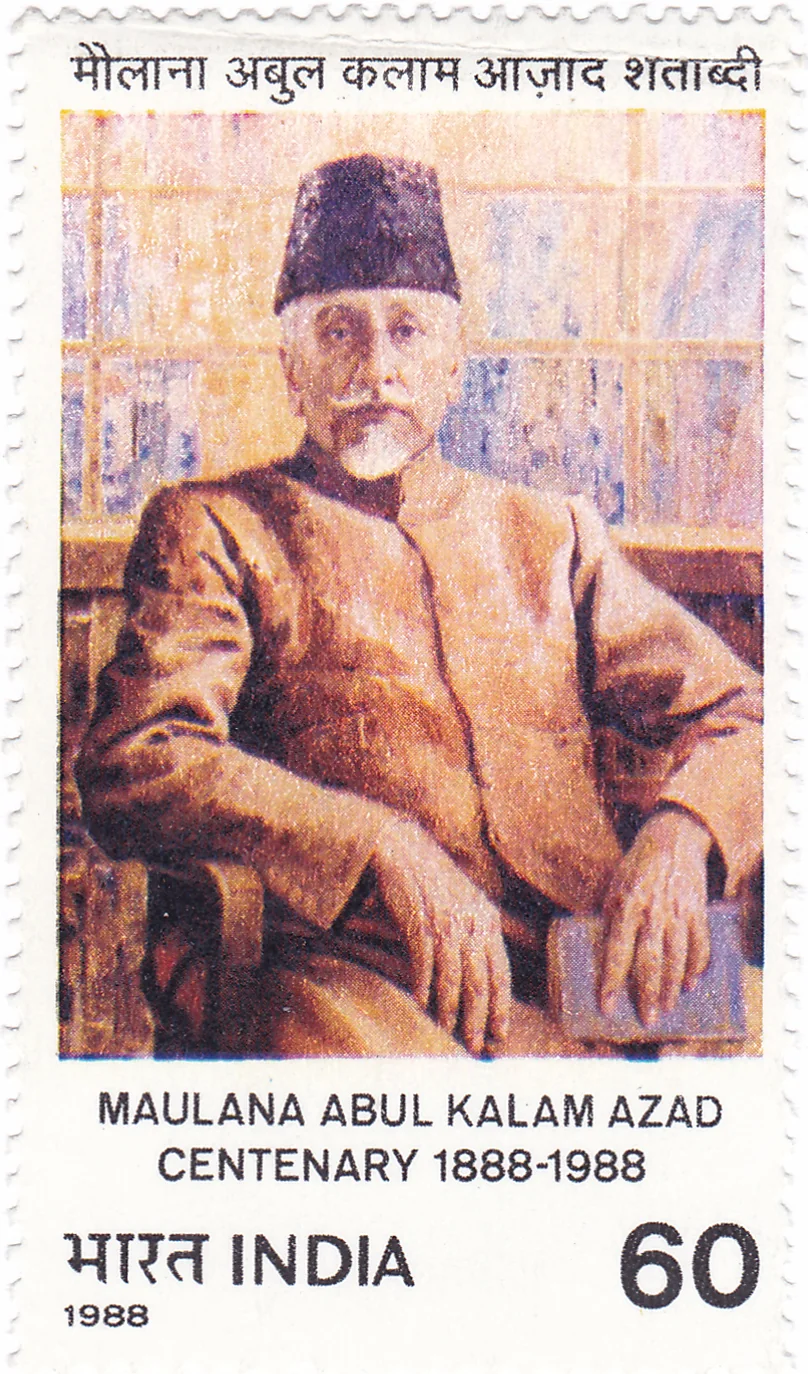
PhilatelyCentenary commemorative stamp issued by India, 1988. -
1992Posthumous
Bharat Ratna
Maulana Abul Kalam Azad is awarded the Bharat Ratna, India’s highest civilian honour, posthumously.
-
200811 November
National Education Day
The Ministry of Human Resource Development announces that 11 November, Azad’s birth anniversary, will be observed annually across India as National Education Day. It has been marked in schools, colleges and universities every year since.
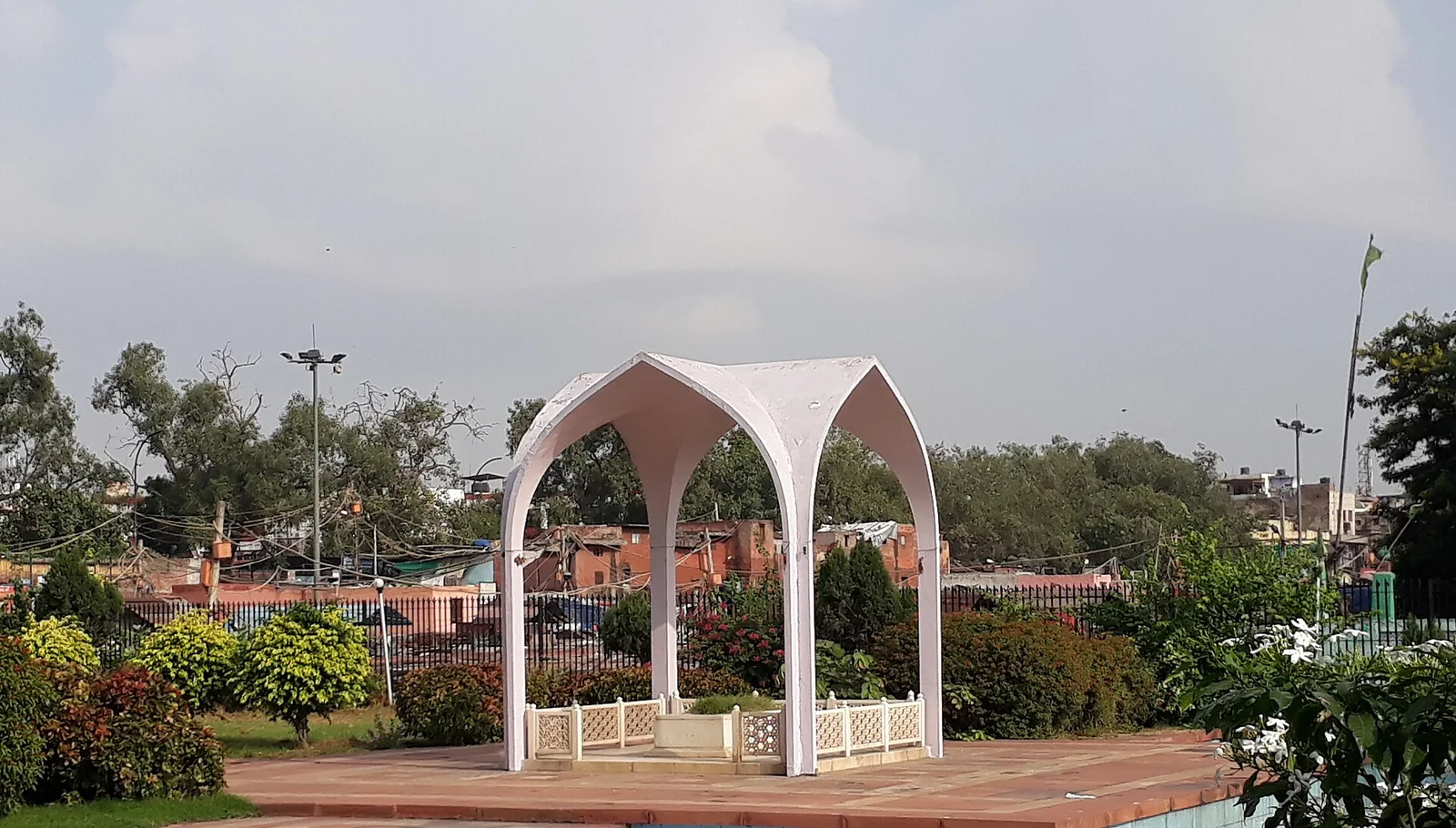
MemorialThe tomb of Maulana Abul Kalam Azad in Old Delhi, near Chandni Chowk.