Educational resources
Learn
Classroom-ready material for students, teachers and researchers: key ideas, a glossary, activities, discussion questions and a myth-checking section.
Written so that a fourteen-year-old can follow it and a researcher can trust it. Nothing here is stated more confidently than the evidence allows.
Who was Maulana Abul Kalam Azad?
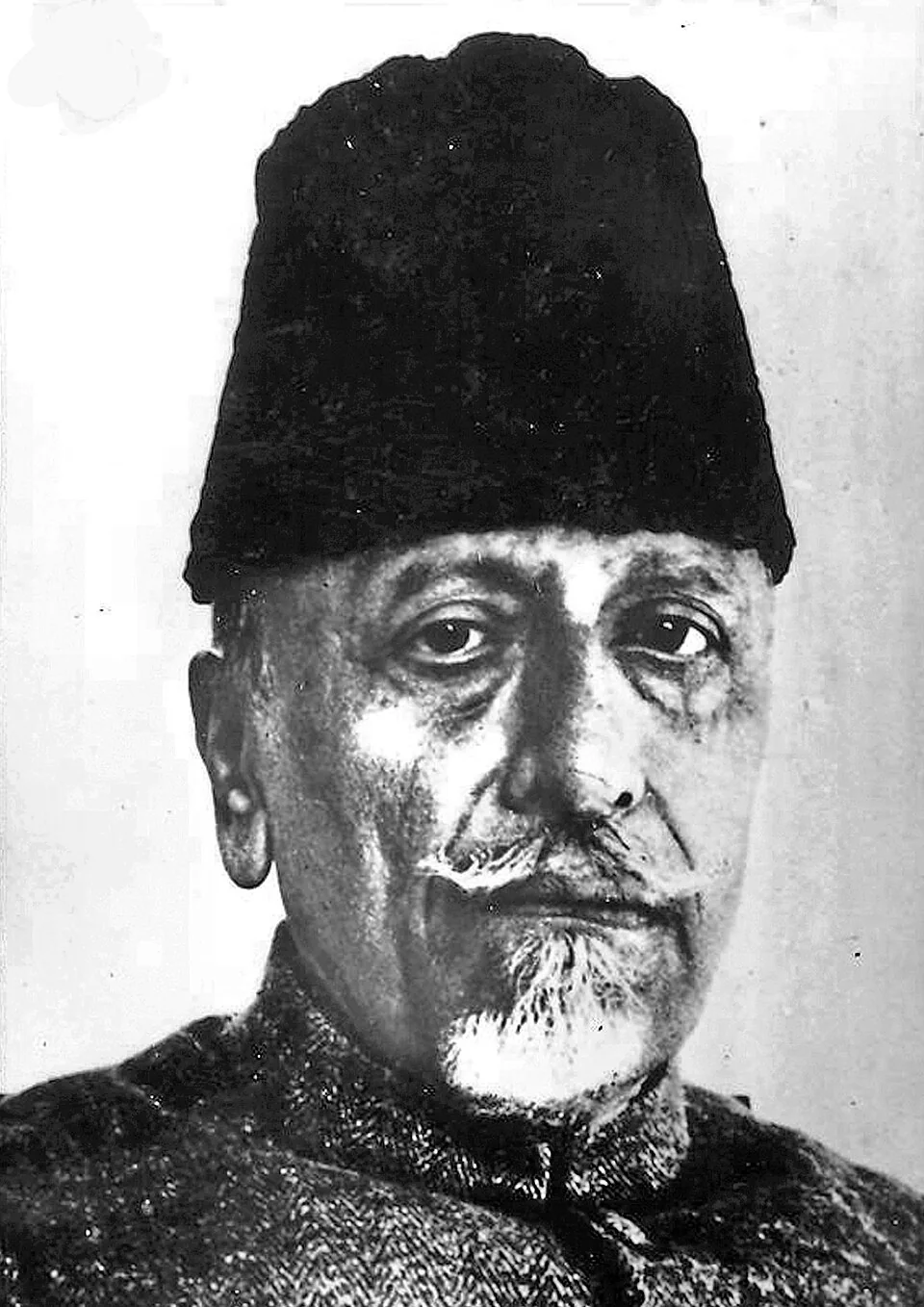
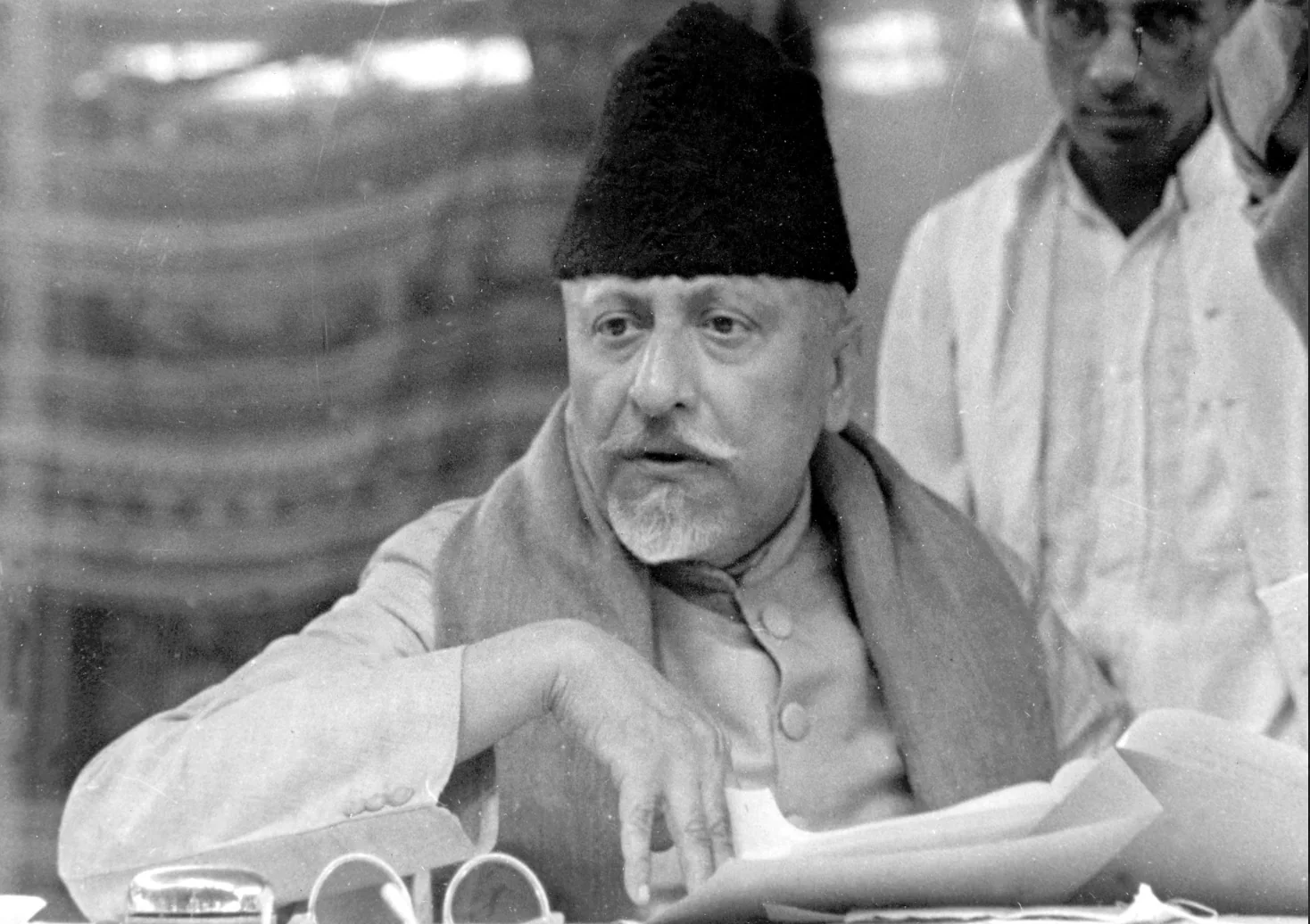
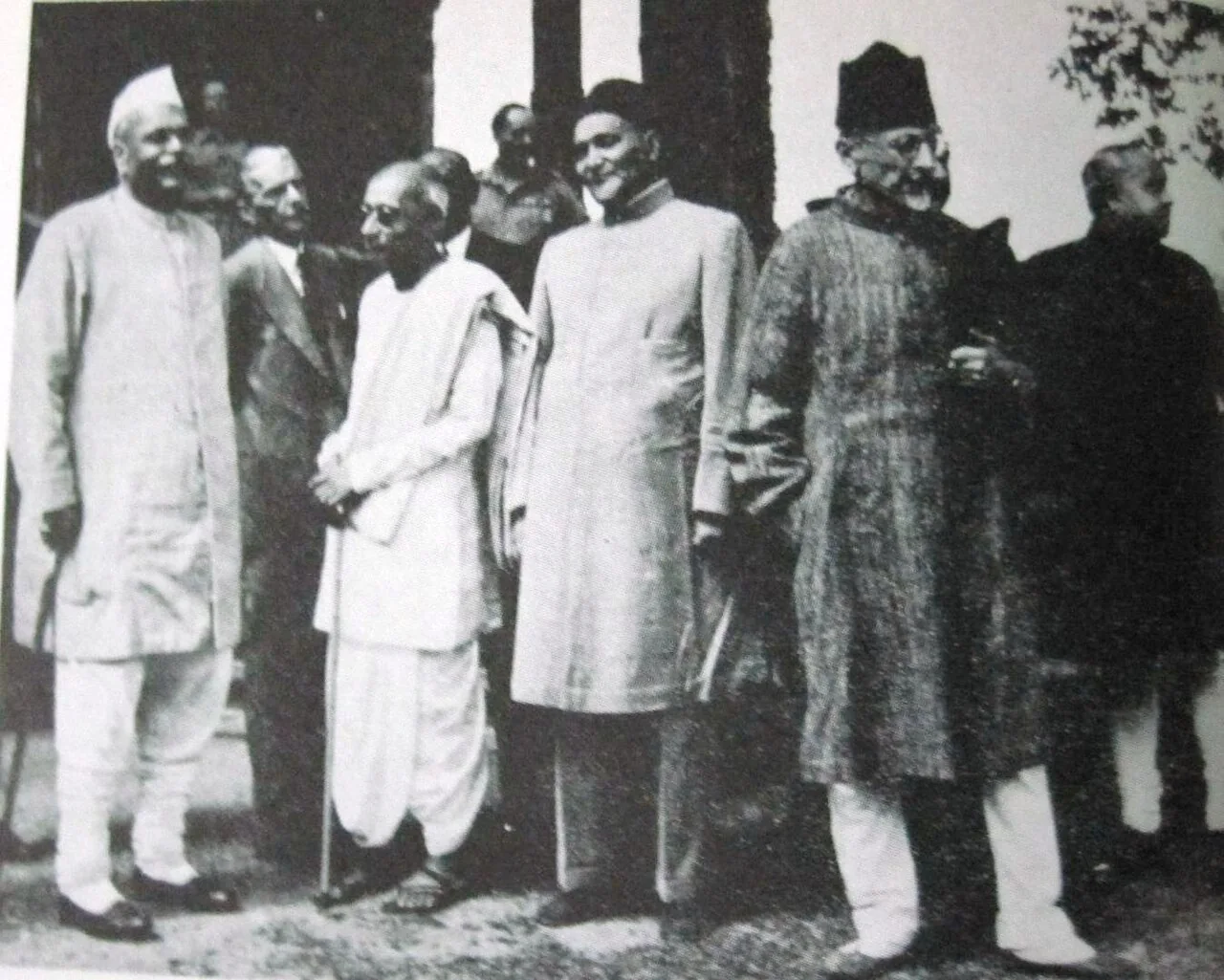
Maulana Abul Kalam Azad was an Indian scholar, writer and political leader who lived from 1888 to 1958. He is remembered for three things above all.
He was a journalist who was silenced twice. He started an Urdu newspaper called Al-Hilal in 1912. It argued that India should be free from British rule and that Hindus and Muslims belonged to one country together. The British government shut it down in 1914. He started another paper, Al-Balagh, in 1915; that was stopped too, and he was kept under restriction until 1920.
He was a leader of the freedom movement. He was president of the Indian National Congress twice: in 1923, when at thirty-five he was the youngest person ever elected to the post, and again from 1940 to 1946, through the Second World War and the Quit India movement. He was imprisoned several times, including for nearly three years at Ahmednagar Fort.
He was India’s first Education Minister. From 15 August 1947 until his death in 1958 he was in charge of education for the newly independent country. He pressed for free schooling for all children, for girls’ education, for science and technical education, and for national bodies to support universities and the arts. India observes his birthday, 11 November, as National Education Day.
Understanding his ideas
Azad’s ideas hang together more tightly than a list of achievements suggests. Four of them are worth knowing.
Knowledge is not divided into permitted and forbidden kinds. He was trained in classical Islamic scholarship and then taught himself history, mathematics and the sciences. He never treated religious learning and modern inquiry as rivals, and this shaped everything he later said about what Indian schools should teach.
Argument belongs in public. He believed that political positions should be explained at length, in the language ordinary readers use, and defended against objections. That is why he was a journalist before he was a politician, and why he kept writing when in office.
A nation is made by shared history, not shared religion. This is his most contested idea, and the one on which he lost. See the section on composite nationalism below.
Education is how a democracy maintains itself. If citizens have to judge candidates, arguments and evidence, then the quality of their education determines the quality of their government. On this view education is not one service among many; it is the maintenance of the political system.
Journalism and India’s freedom movement
Newspapers mattered in colonial India in a way that is easy to underestimate today. There was no Indian parliament to debate in and no Indian government to petition. Print was where the argument about India’s future actually took place, which is why so many leaders of the freedom movement were editors first.
The colonial administration understood this too. Press law required publishers to deposit money as security; if a publication was judged objectionable the money could be seized and a larger deposit demanded. For a small paper, that was usually fatal. After 1914, wartime regulations added powers to detain editors and to remove them from a city.
Both of Azad’s papers were stopped this way. The important lesson is not about one journalist. It is that a government which needs to control what people read is telling you something about the strength of its own case.
Hindu-Muslim unity and composite nationalism
Composite nationalism is the idea that a nation can be formed by many communities living a shared history together, without those communities becoming identical, and without any one of them owning the nation more than the others.
Azad argued this position throughout his life. In his 1940 presidential address to the Congress at Ramgarh he described eleven centuries of shared life in India, and said that this joint history had “moulded us into a common nationality”. He also said, in the same address, that he was proud both of his Muslim inheritance and of being “a part of the indivisible unity that is Indian nationality”.
The opposing position, set out by the Muslim League in the Lahore Resolution of the same month, was that Indian Muslims constituted a separate nation and needed their own state.
For teaching purposes it is worth being clear about three things. First, these were serious arguments held by serious people, not simply good and bad positions. Second, they were made in a specific political situation, and the situation matters. Third, Azad’s position did not prevail in 1947, and understanding why is more useful than deciding who was right.
The history of Partition
In August 1947 British India was divided into two independent states, India and Pakistan. The provinces of Bengal and Punjab were themselves partitioned. Very large numbers of people were killed and many millions were displaced.
Estimates of the death toll vary widely between historians and should be treated with caution; the underlying records are incomplete. Responsibility for Partition is also genuinely contested among historians, and any classroom treatment should present it as an open question rather than a settled one.
What can be said clearly about Azad: he opposed the division of India consistently from 1940 onwards; he supported the Cabinet Mission plan of 1946, which would have kept the country united under a federal arrangement; and available accounts record that he abstained when the All India Congress Committee accepted the partition plan in June 1947. On 23 October 1947 he addressed Muslims at the Jama Masjid in Delhi, urging those who had stayed in India not to leave and not to live as supplicants.
Read the fuller account, with its notes on disputed history.
Education in a newly independent India
Imagine being asked to build a school system for a country of hundreds of millions of people, most of whom cannot read, with almost no money, in the middle of a refugee crisis. That was the job in 1947.
Azad’s priorities, as recorded in government sources, were: free and compulsory education for children; education for girls and women; the teaching of modern science; the expansion of technical education; and the quality of university teaching. The Constitution adopted in 1949 directed the state to provide free and compulsory education for all children up to age fourteen within ten years.
That target was not met. India took much longer, and the right to education did not become legally enforceable until 2009. This gap between commitment and delivery is worth discussing in class: it shows that establishing a principle and achieving it are different problems, and that the first is not worthless just because the second takes decades.
Institution building
Institutions are organisations designed to keep doing something after the people who started them have gone. Several that Indians still use every day took shape during Azad’s eleven years as Education Minister.
- Indian Council for Cultural Relations, founded April 1950 — Azad was its founding president.
- IIT Kharagpur, 1951 — the first IIT, established under his ministry.
- Sangeet Natak Akademi, established by government resolution 1952 — music, dance and drama.
- University Grants Commission, inaugurated by Azad on 28 December 1953; statutory from 1956.
- Sahitya Akademi, inaugurated 12 March 1954 — literature.
- Lalit Kala Akademi, inaugurated by Azad on 5 August 1954 — the visual arts.
Note the careful wording. Some of these Azad founded; some he inaugurated; some were created by committee recommendation during his tenure. Precision here is a good habit to teach: it is the difference between history and advertising.
Key historical terms
- Al-Hilal
- “The crescent”. The Urdu weekly newspaper Azad launched on 13 July 1912 in Calcutta, suppressed by the colonial government in 1914.
- Al-Balagh
- The second Urdu weekly Azad launched, from 12 November 1915, after Al-Hilal was stopped. It ran into 1916.
- Maulana
- A title of respect for a Muslim religious scholar. It is not a name; it indicates learning and standing.
- Azad
- “Free”. The pen-name Abul Kalam adopted as a young writer, which became the name he was known by for the rest of his life.
- Khilafat movement
- An agitation, from around 1919, concerning the position of the Ottoman Caliphate after the First World War. It joined with Non-Cooperation to produce the widest Hindu-Muslim political cooperation of the colonial period.
- Non-Cooperation
- The Congress movement launched in 1920 under Gandhi’s leadership, based on withdrawing cooperation from colonial institutions. Suspended in 1922.
- Civil disobedience
- Deliberate, open, non-violent refusal to obey specific laws, used as a mass political method in India from 1930.
- Composite nationalism
- The position that India is one nation formed by many communities sharing a long history, requiring no cultural uniformity.
- Two-nation theory
- The opposing position that Indian Hindus and Muslims constituted two distinct nations. It underpinned the demand for Pakistan.
- Quit India
- The movement launched by the Congress resolution of 8 August 1942 demanding an immediate end to British rule. Its leadership was imprisoned within days.
- Cabinet Mission
- The British mission of 1946 that proposed a federal union with grouped provinces — the last plan that would have kept India undivided. Azad supported it.
- Constituent Assembly
- The body that drafted the Constitution of India between 1946 and 1949. Azad was a member.
- Bharat Ratna
- India’s highest civilian honour. Awarded to Azad posthumously in 1992.
- National Education Day
- Observed in India on 11 November, Azad’s birth anniversary, following a decision announced in 2008.
Timeline activities
Three exercises built on the timeline page, in increasing order of difficulty.
- Build a parallel timeline. Take the years 1912 to 1958. On one line, mark the events in Azad’s life. On a second line beneath it, mark what was happening in the wider world — the First World War, the Second, decolonisation elsewhere. What do the two lines explain about each other?
- Trace one idea. Follow the argument for a single Indian nationality from Al-Hilal in 1912, through the Ramgarh address of 1940, to the Jama Masjid speech of 1947. Write 300 words on whether the argument changed, and if so how.
- Cost the gap. The Constitution of 1949 set a ten-year target for free and compulsory education to age fourteen. Find out when India actually made that right enforceable. Write an account of why the gap was so long, using at least two sources that disagree with each other.
Discussion questions
- Why might a colonial government find a newspaper more threatening than a speech?
- Azad was a religious scholar who argued for a secular state. Is that a contradiction? Give reasons for your answer.
- He described a shared history of many centuries as having created “a common nationality”. What makes a group of people one nation? Is a shared history enough?
- Azad lost the argument about Partition but went on making it afterwards. When is it right to keep arguing for a position that has been defeated?
- He put money into academies for literature and art in a decade when India could not get all its children into primary school. Was that the right decision? What is the argument on each side?
- What does it mean to say education is “the foundation of a democracy” rather than a service the state provides? Does the difference change what a government owes you?
- Why does this website say “available accounts record” instead of simply stating some facts? What does that phrasing tell you about the evidence?
Myth vs documented history
Widely repeated claims, checked against the record.
Often saidAzad single-handedly founded the IITs, the UGC and India’s national academies.
The recordThese bodies were created by committee recommendation, government decision and legislation. Azad was the minister who pressed for them, carried them through and, in several cases, formally inaugurated them. He was the founding president of the ICCR. Precision matters more here than praise.
Often saidInspirational one-line quotations attributed to Azad, circulated widely online.
The recordMany of these cannot be traced to any published text. This site quotes only from documented sources — principally the English translation of the 1940 Ramgarh presidential address and reported translations of the 1947 Jama Masjid address. If a quotation has no source, treat it as unverified.
Often saidAzad had no formal education at all.
The recordHe had a rigorous formal education in the classical Islamic curriculum, delivered at home by his father and tutors rather than at a school. What he acquired independently was the modern subjects — history, philosophy, mathematics, the sciences. “Self-taught” describes half the story.
Often saidHe founded AICTE, the technical education council.
The recordAICTE was set up in November 1945, before independence and before his ministry, and became statutory in 1987. It operated within his ministry during the expansion of technical education in the 1950s.
Often saidIndia Wins Freedom is a neutral record of what happened.
The recordIt is a valuable first-hand account and an openly partisan one. Azad wrote with strong views about his colleagues’ conduct, and other participants disputed parts of it. About thirty pages were withheld until 1988. Read it, but read it alongside other accounts.