The printed word
Al-Hilal & Al-Balagh
Two Urdu weeklies, four years of publishing between them, and two closures by the colonial state. Most of what Azad had to say before office is here.
A newspaper is a strange thing to be remembered for. These two were remembered because a government went to the trouble of stopping them.
The story of Al-Hilal and Al-Balagh is not a story about newspapers that failed. It is a story about how much of a threat two Urdu weeklies could be to an imperial administration — and about a writer who, having been shut down once, immediately started again.
Chapter one
Al-Hilal
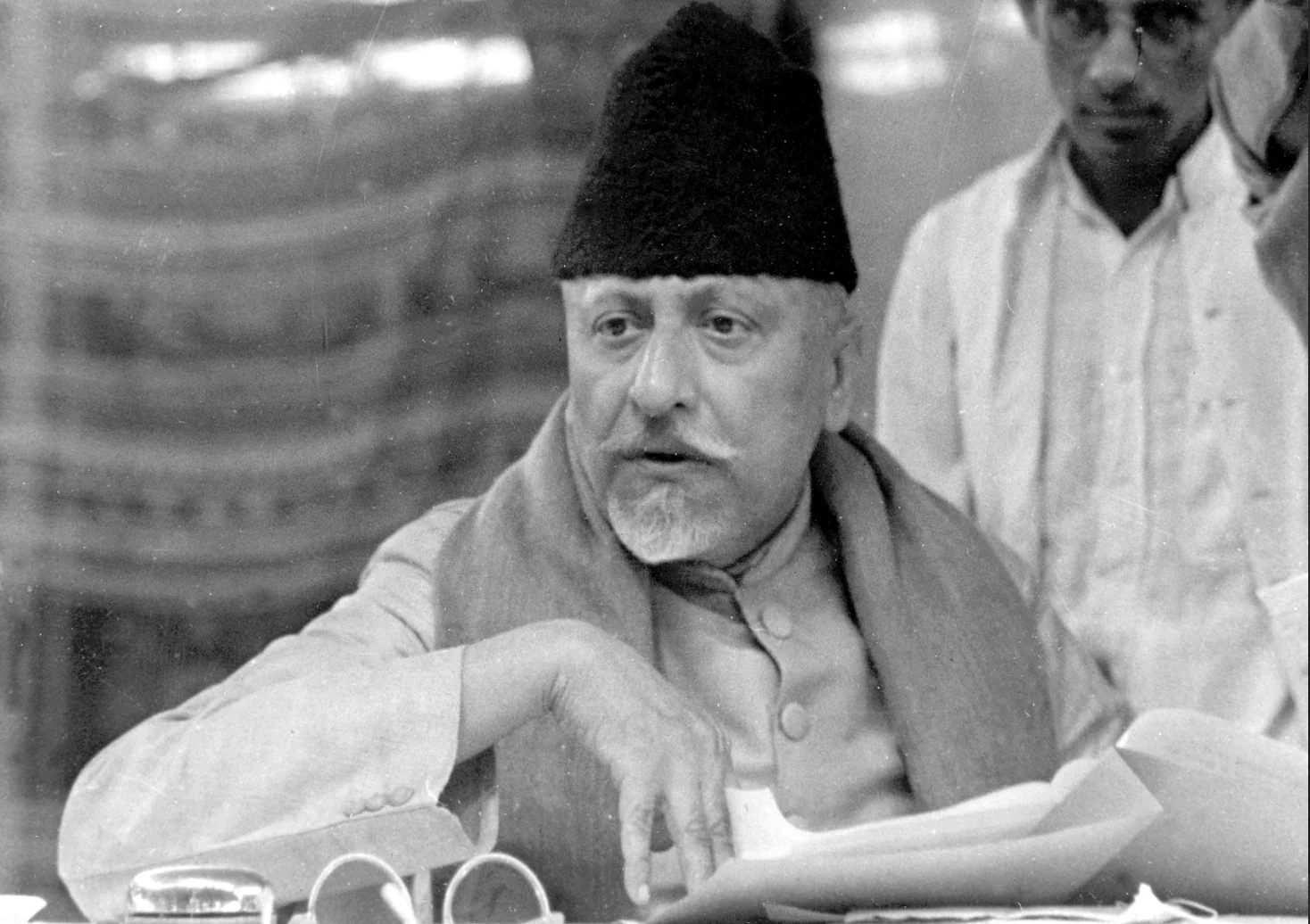
The first issue appeared on 13 July 1912, published weekly in Urdu from Calcutta and edited by a twenty-three-year-old.
Al-Hilal — the name means “the crescent” — was created to do something that had not quite been done before in Urdu: to argue, week after week and at length, that Indian Muslims belonged inside the Indian national movement and that the future of their community lay in a shared Indian future rather than a separate one.
The paper was aimed at a young readership: students, teachers, junior professionals, the newly literate. It assumed that its readers were serious, and it addressed them accordingly — long essays, sustained argument, careful citation, and a refusal to simplify. Contemporary accounts describe it as produced to a standard of printing, illustration and paper unusual for the Urdu press of the period.
Its politics were unmistakable. It made the case for Indian nationalism, for Hindu-Muslim cooperation as a matter of principle rather than tactics, and against the idea that the interests of Indian Muslims were best served by accommodation with the colonial government. In 1912 those were not settled positions. They were contested, urgently, and Al-Hilal contested them.
Publication record
- Title
- Al-Hilal — “the crescent”
- First issue
- 13 July 1912
- Frequency
- Weekly
- Language
- Urdu
- Place
- Calcutta
- Editor
- Abul Kalam Azad
- Suppressed
- 1914, under press legislation
- Successor
- Al-Balagh, from 12 Nov 1915
Original issues of both papers survive in Indian library and university collections, and digitised runs have been made publicly available by several institutions.
Chapter two
Suppression
The colonial state did not argue back. It had a simpler instrument.
Press regulation in British India worked mainly through money and deposits. A publisher could be required to deposit a security; if the administration judged the publication objectionable, the security could be forfeited and a larger one demanded before printing could continue. For a periodical operating on thin margins, one forfeiture was usually enough.
After the outbreak of the First World War in 1914, the administration acquired further powers over publication, movement and detention under wartime regulations. Government and institutional accounts record that Al-Hilal was suppressed by the colonial government under press legislation in 1914.
It is worth pausing on what that decision tells us. A government does not spend administrative effort closing a publication nobody reads. The suppression of Al-Hilal is the clearest surviving evidence of how seriously the colonial administration took it — and, by extension, of how far its argument had travelled in two years.
How the press was controlled
- Securities and forfeiture — publishers were required to deposit money that could be seized, making publication itself the risk.
- Escalating demands — a larger security could be required before printing resumed, pricing small papers out.
- Wartime regulations — from 1914, powers over publication, movement and detention widened considerably.
- Personal restriction — editors could be removed from a city and held without ordinary trial.
The effect was not to answer nationalist journalism but to make producing it financially and personally unsurvivable.
Chapter three
Al-Balagh
A year after Al-Hilal was stopped, Azad began publishing again.
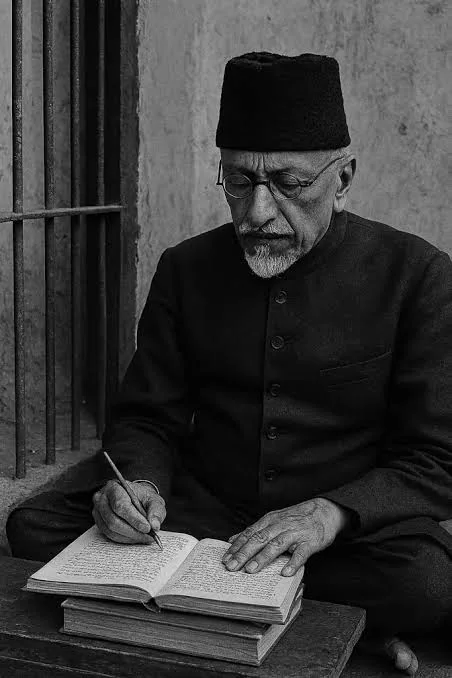
Al-Balagh — the name carries the sense of a message delivered, a communication conveyed — appeared from 12 November 1915, again as an Urdu weekly from Calcutta, and continued the intellectual and political work of its predecessor. Library records for the paper cover the months from November 1915 into March 1916.
The second paper did not survive long either. It was stopped in 1916, and Azad was removed from Calcutta under the wartime Defence of India regulations. He was held under restriction — latterly at Ranchi — and not released until 1 January 1920.
That is the arithmetic of the period: two papers, roughly four years of publishing between them, and then four years in which Azad could not publish at all. When he emerged at the beginning of 1920, the political landscape had changed completely — and he entered mass politics almost immediately.
Publication record
- Title
- Al-Balagh
- From
- 12 November 1915
- Frequency
- Weekly
- Language
- Urdu
- Place
- Calcutta
- Editor
- Abul Kalam Azad
- Stopped
- 1916, under wartime regulations
- Editor released
- 1 January 1920
Chapter four
Words that outlived the paper
Neither paper lasted. The argument they carried lasted fifty years.
Political journalism in colonial India worked differently from journalism in a settled democracy. It was not primarily a check on power — there was no domestic power to check that would answer to Indian readers. It was constitutive: it created the public it addressed. Before there could be a national movement, there had to be a body of people who understood themselves as belonging to a nation, and that understanding was largely built in print.
That is the frame in which Al-Hilal and Al-Balagh matter. Their measurable circulation is less important than the fact that a cohort of young Urdu readers encountered, at a formative age, a serious case for Indian nationalism made in their own language and from within their own tradition. A number of them spent the following decades acting on it.
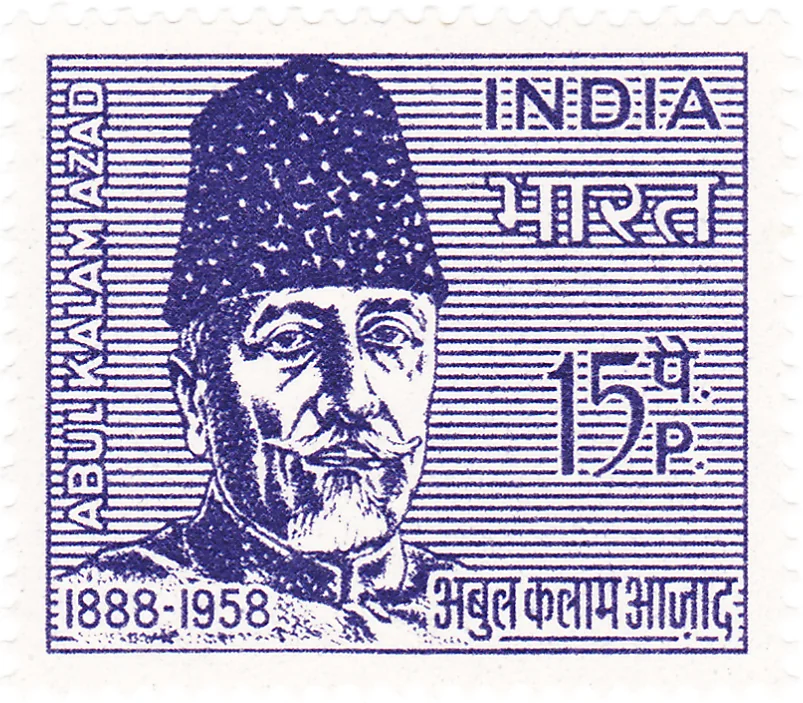
The papers also established Azad himself. When he entered Congress politics in 1920, he did so as a known quantity with a national readership already behind him. Three years later he was president of the Indian National Congress.
- 1912
Al-Hilal begins
13 July. A weekly Urdu paper arguing for Indian nationalism and cooperation across communities.
- 1914
Suppressed
Stopped by the colonial government under press legislation.
- 1915
Al-Balagh begins
12 November. The successor weekly, continuing the same argument.
- 1916
Stopped again
Closed under wartime regulations; Azad removed from Calcutta.
- 1920
Released
1 January. He enters mass national politics within months.
- 1923
Congress president
At thirty-five, the youngest to hold the office.