Afterwards
Legacy & National Education Day
Why India stops on 11 November every year to argue about education, and what else survived him.
Observed across India since 2008
11
November
National Education Day
Why this date
A birthday turned into an argument
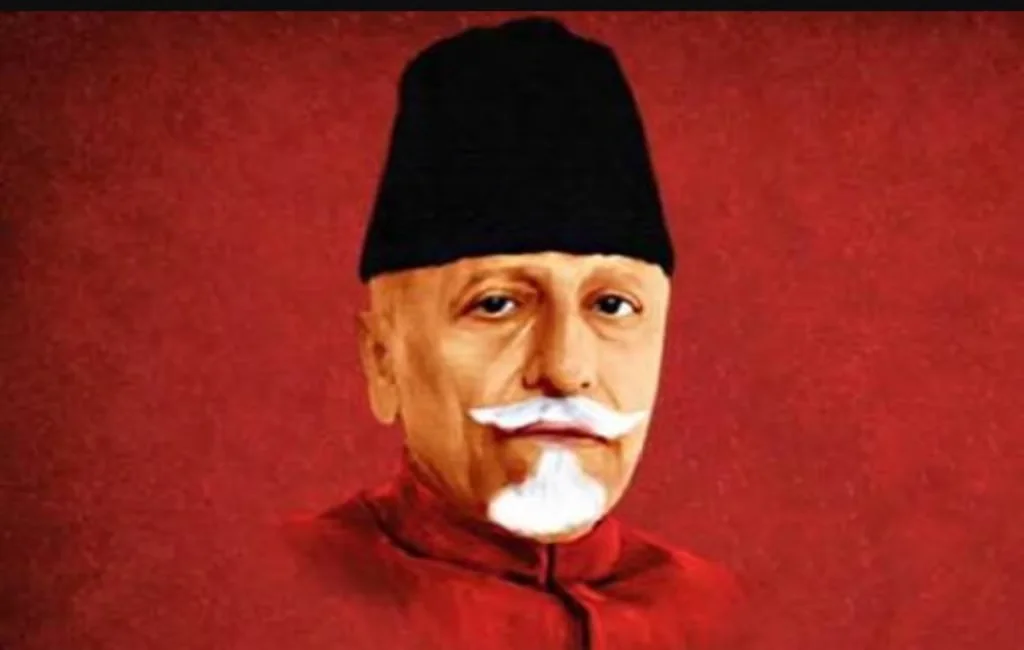
On 11 September 2008 the Ministry of Human Resource Development announced that 11 November — Maulana Abul Kalam Azad’s birth anniversary — would be observed annually as National Education Day.
It has been marked in schools, colleges and universities across the country every year since, usually with seminars, essay competitions, exhibitions and discussions about the state of Indian education.
The choice of Azad’s birthday is not decorative. It attaches the country’s annual conversation about education to the person who first had to build its national machinery, and therefore to the specific arguments he made while doing it: that access matters more than excellence for a few; that girls’ education is not a separate or optional question; that science and the humanities are not rivals; and that a democracy’s capacity to function depends on how well its citizens have been taught to think.
None of those propositions is settled in Indian public life. That is precisely what makes an annual date useful rather than ceremonial.
The inheritance
Six things that outlived him.
-
Education as a public obligation
The principle that schooling a child is a duty of the state rather than a favour to a family was established in India’s founding decade, and Azad was among those who established it. Delivery took far longer than intended; the obligation itself was never withdrawn.
-
An architecture for higher education
The University Grants Commission, inaugurated by Azad in 1953 and made statutory in 1956, is still the central body coordinating and funding Indian universities. Almost every Indian graduate has passed through a system it regulates.
-
Technical capacity
The first IIT opened at Kharagpur in 1951 during his tenure. The network that grew from it became India’s principal engine of engineering education and, indirectly, one of the country’s largest exports of skilled labour.
-
Culture as national infrastructure
Placing the three national academies and the ICCR inside the education portfolio said that literature, music, dance, theatre and art are part of a country’s educational endowment. All four bodies still operate.
-
Composite nationalism
His argument that a shared political nationality does not require cultural uniformity remains a live term in Indian public debate — invoked and contested from several directions, which is what happens to arguments that have not been settled.
-
A model of the public intellectual
A scholar who argued in public, in his readers’ own language, for fifty years, and who went on arguing after losing. The form is at least as durable as any particular position he took.
Commemoration
How India has remembered him
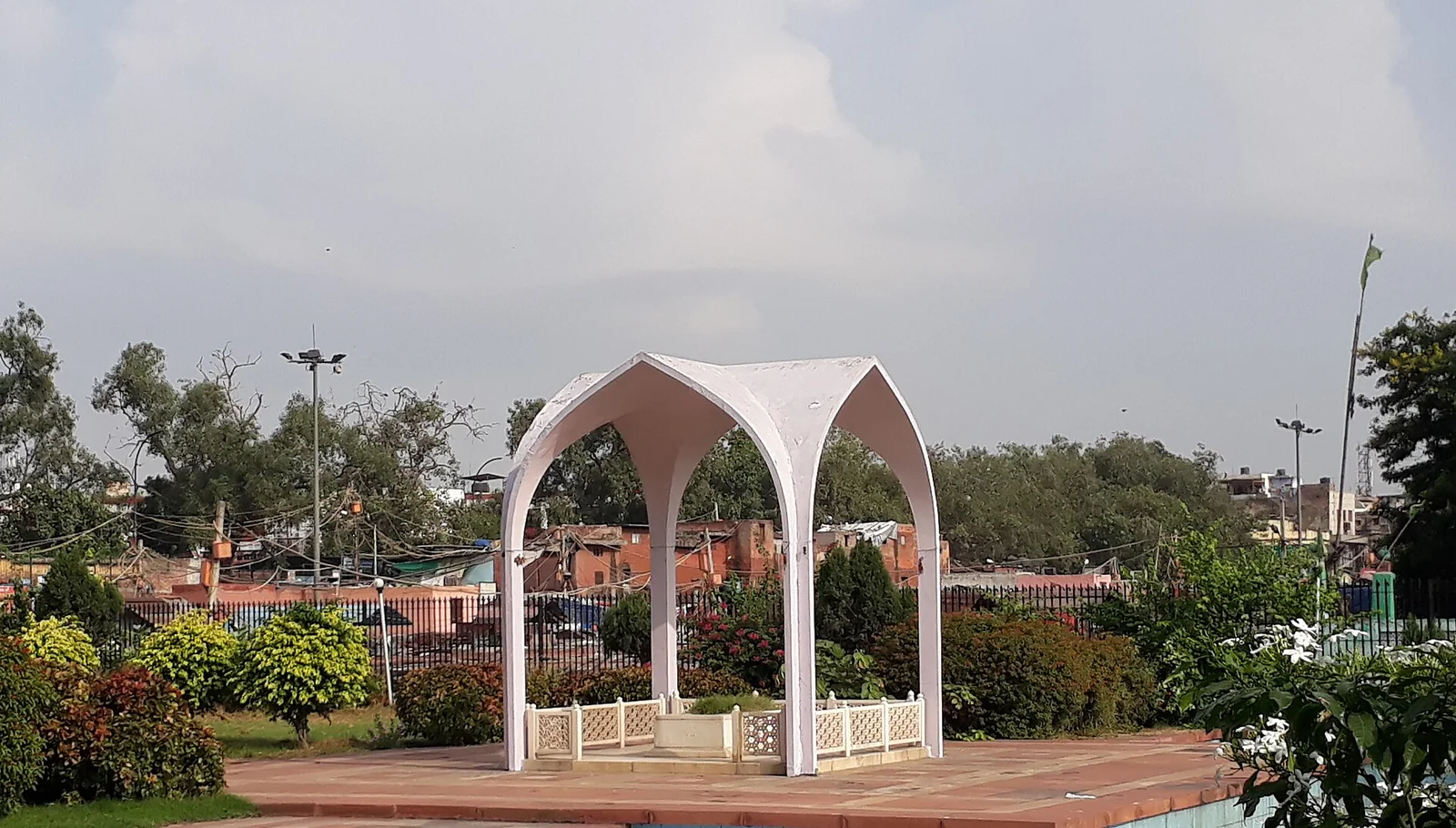
Azad died in Delhi on 22 February 1958 and was buried near the Jama Masjid in Old Delhi. The tomb, in a landscaped enclosure beside Chandni Chowk, is a public site.
He was awarded the Bharat Ratna, India’s highest civilian honour, posthumously in 1992. A statue of him stands in the Parliament complex in New Delhi. India has issued commemorative postage stamps in his honour, including a 1966 issue, a centenary issue in 1988 and a further issue in 2015.
His name is carried by a number of Indian public institutions, among them Maulana Azad National Urdu University in Hyderabad, Maulana Azad Medical College in New Delhi and Maulana Azad National Institute of Technology in Bhopal, along with scholarships and fellowships administered by the government.
Naming an institution after someone is a weak form of memory; it can persist long after anyone recalls what the person argued. The more useful commemoration is the annual one, because it asks a question rather than making a statement.
-
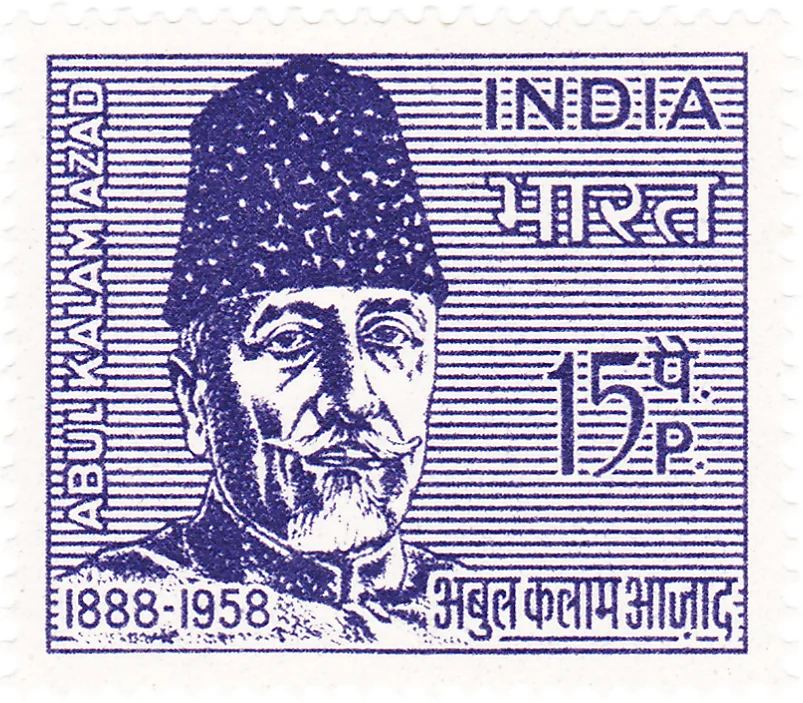
1966 -
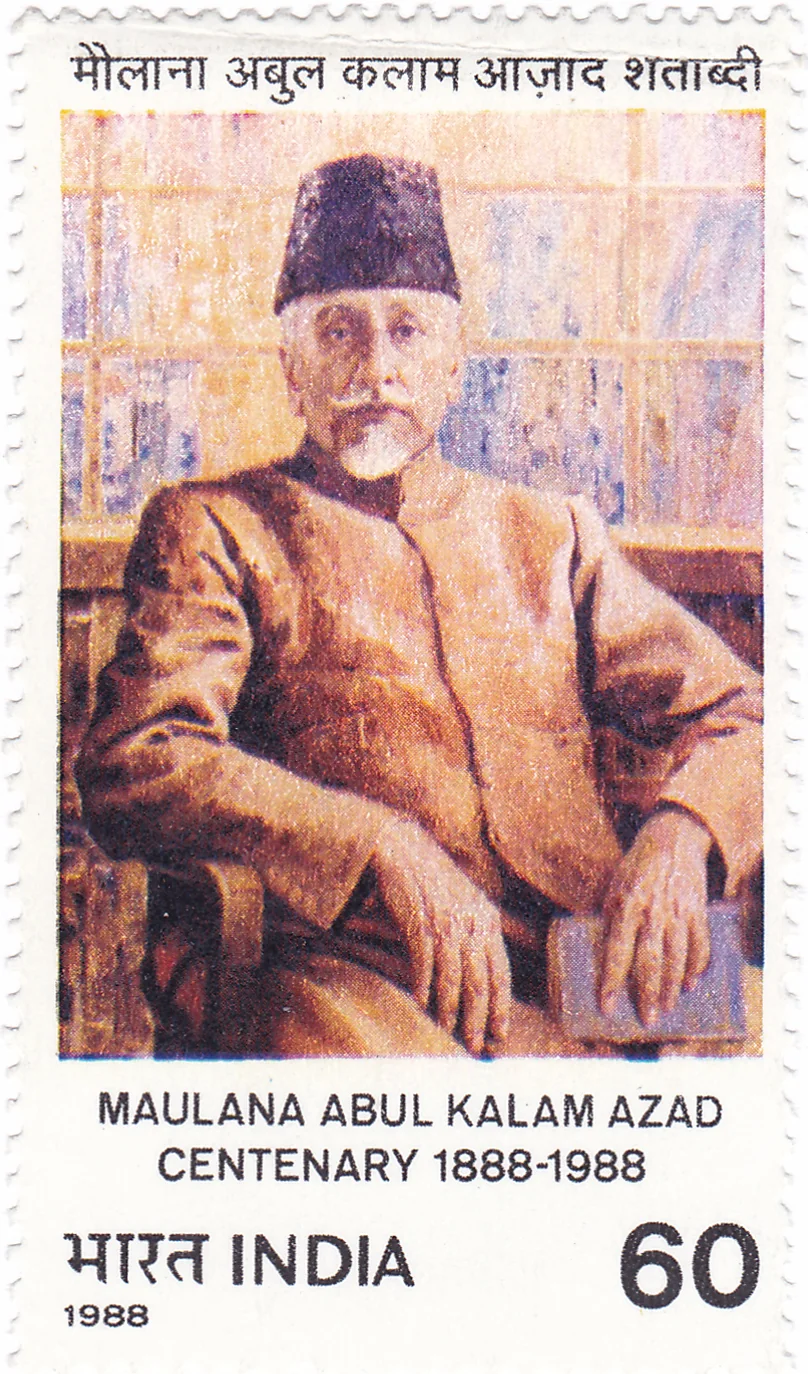
1988 -
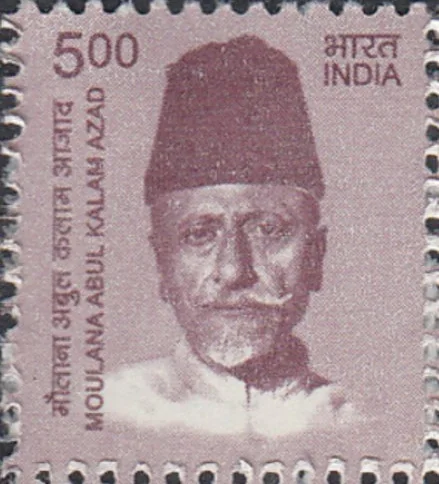
2015
Still relevant
The questions he left open
How does a society that is genuinely diverse hold together without demanding that people become the same? Azad thought a shared history was enough, and that constitutional guarantees could carry the rest. The question is not closed anywhere in the world.
What does a state owe a child whose family cannot pay for schooling? He answered: everything necessary, as an obligation rather than a kindness. India took sixty years to make that answer enforceable, and delivering on it is still contested work.
How much science belongs in a general education? He argued for a disposition towards evidence rather than a stock of technical facts — a distinction that has become sharper, not softer, since he made it.
What is a country’s culture for when it meets the rest of the world? He founded a body to answer that in 1950, on the view that cultural confidence and openness are the same disposition rather than opposite ones.